
Check Newaygo County's Current Owner Record
To see who owns a parcel in Newaygo County, start with the local assessment roll. You can reach it through BS&A Online. Each roll card ties the owner label to a PIN. It also carries the situs, tax mailing address, class, acreage, value fields, and legal-description text. Read those fields as a group. A bare name without the parcel key can point to the wrong person. A mailing address alone proves nothing about who occupies the property. Keep the whole card in view.
| Owner name | The primary owner text and any second-owner or care-of entry |
|---|---|
| Mailing address | The destination used for assessment and tax notices |
| Situs address | The location assigned to the parcel itself |
| Parcel key | The formatted PIN and its packed numeric form |
| Sale and deed clue | The displayed sale field and any recording reference available |
| Land match | Class, acreage, and long legal-description fields |
The tax mailing address is simply the contact route the owner chose for roll notices. It may be a different property, a post-office box, or a care-of line. Owner 2 and care-of fields can also preserve a co-owner, a fiduciary, or a delivery instruction that a brief map label leaves out.
Verify Newaygo County's Owner of Record Now
A newly recorded deed can move faster than the assessment roll. Verify the roll name through the Register of Deeds search route. Match the exact owner spelling, PIN, and legal description. LandWeb searching is free. The county states that viewing a document carries a $5 card charge. Copies run $1 per page.
- Search BS&A Online by address, name, or parcel number. Record the exact owner text, situs, mailing address, jurisdiction, and PIN.
- Open LandWeb and search the same party as grantee. Use the PIN or legal description to reject deeds for different land.
- Compare the roll date with the newest deed's recording date. A newer deed may explain why the roll still carries the seller.
- If the owner is a company, verify its legal name through the Michigan business entity search. Treat that filing as context, not title proof.
- Owner of record
- The person or entity named on the current public roll for the parcel.
- Assessment roll
- The local record used to administer assessed and taxable values.
- Situs address
- The parcel's location, which may differ from the owner's mailing address.
- Recording lag
- The time between a conveyance, recording, and a later roll update.
Read the Newaygo County Owner Card as a Set
The GIS parcel service returns owner, second owner, care-of, mailing, situs, PIN, class, acreage, assessed or equalized value, and taxable value. It adds the full legal description. Treat these fields as one set. Isolate any single item and you lose the context that ties a name to land. Keep the owner name, mailing address, situs, any sale field shown, and deed clue together under the same PIN. Record both PIN formats, such as 62-04-06-100-020 and 620406100020. The county parcel query displays the fields side by side.
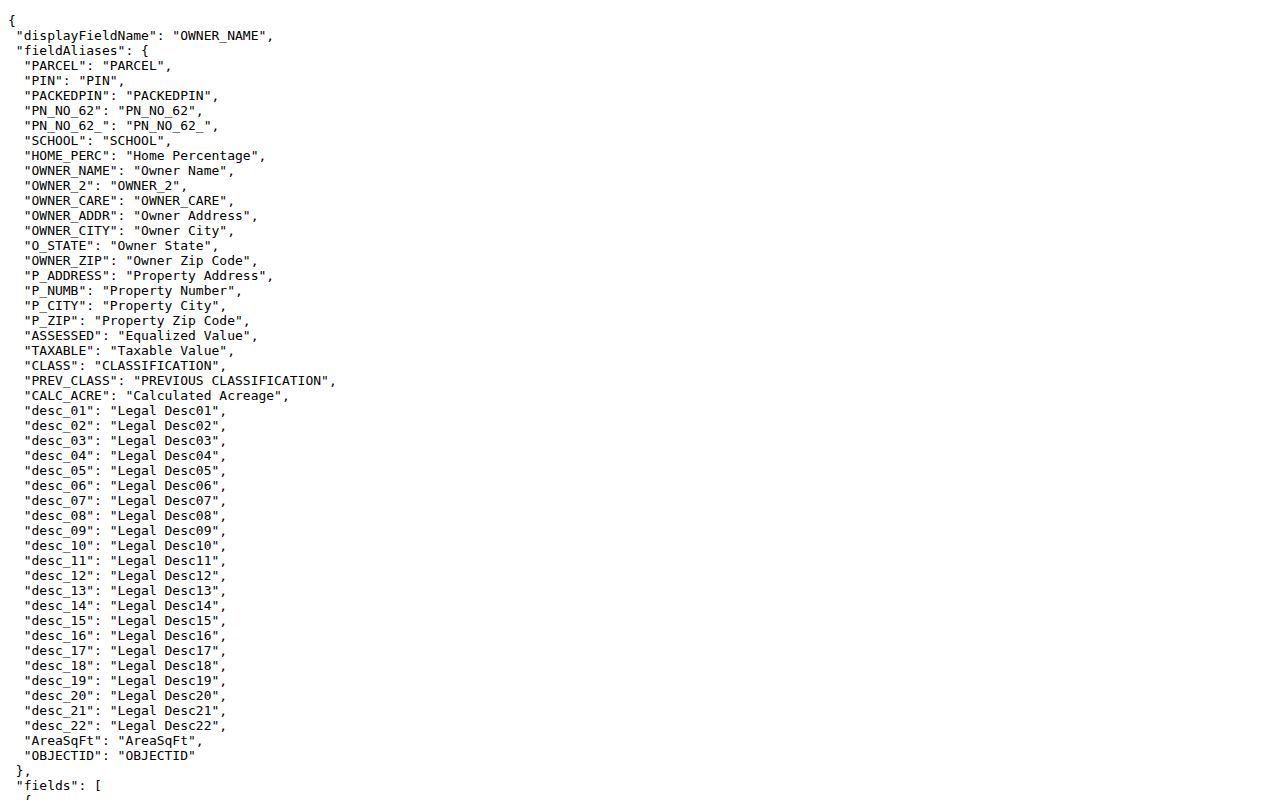
The parcel data keeps the site address apart from owner mail and pairs both with land facts. That structure is what makes it reliable. It lets you confirm that a current-owner result truly belongs to the parcel you meant.
Ask the Right Newaygo County Office About an Update
Assessment records in Newaygo County live at the local-unit level. They are spread across 24 townships, four cities, and one village, with County Equalization coordinating countywide work. A roll-entry question belongs to that local assessor. A question about whether a deed was recorded belongs to the Register of Deeds. Counter hours run Monday through Friday, 8 a.m. to 5 p.m. Independent terminals are open Tuesday through Thursday, 9 a.m. to 4 p.m. This office split shapes how an error gets fixed. County Equalization coordinates studies and reports. It cannot replace the city or township assessor for a parcel-level roll change. Give the assessor the PIN, jurisdiction, owner text, and roll year. Give the Register an instrument number, party name, recording date, or matching legal description.
Resolve a Recent Newaygo County Transfer
A closing date and a recording date can differ. A roll-update date can land at a third point. Start with the current roll card and note its owner name and sale field. Search that name as a grantee in LandWeb. Then inspect the most recent candidate whose legal description matches. The deed may have been recorded after the roll's effective date. If so, the apparent disagreement may be nothing more than timing. The deed may predate the roll. The names may still differ. Do not guess which system slipped. Save screenshots or copies, the instrument number, PIN, and every date. Ask the local assessor about the roll. Ask the Register of Deeds about the recorded index. Each office controls its own record.
Freshness check. A newly recorded deed can outrun the assessment roll, so the newest matching conveyance is the stronger current-owner clue.
Read a Newaygo County Trust or Company Owner
A current owner in Newaygo County may appear as a trust, an estate, a limited liability company, or an individual with a care-of line. Copy the label exactly, down to initials and punctuation. The Michigan Corporations Online Filing System can clarify a company's legal name and resident-agent filing, though it cannot replace the deed or expose every person with an economic interest. For an estate, probate records may explain authority or succession, while the deed index shows what was recorded against the land. A trust date or trustee label can separate similar names. Keep the inquiry on the present owner field and the newest conveyance. Building a full historical chain is a former-owner search, a different task entirely.
Document a Newaygo County Current Owner Check
A reproducible note should carry the search date, source portal, complete PIN, situs, and jurisdiction. It should also record the exact owner text, owner mailing text, roll year, newest matching deed date, instrument or book-page reference, and the legal-description phrase that tied them together. Another reader can then tell whether a later update changed the conclusion. Never infer occupancy from an exemption, a mailing address, or an owner name. Those facts can guide a lawful ownership check. They say nothing about private living arrangements. For ordinary contact, use the public mailing address respectfully. Store both PIN formats. Note whether the current owner came from BS&A or the GIS parcel layer. When a legal decision turns on title, rely on professional title evidence rather than treating a public tax field as proof.
Check Newaygo County Owner Two Fields
A Newaygo County parcel record holds three name fields. There is a primary owner, a second owner, and a care-of line. The map label shortens things, so it can hide part of the full entry. Copy the complete text with its punctuation. Then compare it against the grantee name on the newest deed. A second name usually means a co-owner. But a care-of entry is often just a mailing instruction. Neither belongs folded into the first owner's name without evidence from the deed.
Keep Newaygo County Exemptions Separate
Newaygo County assessment records can flag a Principal Residence Exemption or an agricultural classification. Those entries answer a tax question. They say nothing about who occupies the parcel today. Ownership still rests on the named roll field and the latest matching conveyance, so treat exemption data as tax data and nothing more. Skip any guess about a private living arrangement drawn from a mailing address, property class, or exemption status.
The same caution applies to value fields. Assessed, equalized, and taxable value describe how the parcel is taxed by the Newaygo County assessor. No value figure names a hidden beneficial owner. No appraisal amount overrides the deed.
Respect Newaygo County Protected Addresses
Michigan's Address Confidentiality Program gives eligible survivors a designated address and mail forwarding. It cannot erase a deed already recorded in the county. Present a designated or care-of address exactly as the record shows it. Never guess a suppressed location. Do not work backward from parcel, business, or deed entries.
Use Newaygo County Owner Mail Details Carefully
The mailing address on the tax roll exists for one purpose. It gives the public a lawful way to send ordinary property correspondence. Treat it as a delivery point. It is not a claim that the owner of record lives there. Michigan's Address Confidentiality Program already offers designated addresses and forwarding to eligible survivors. Recorded land documents stay on the record regardless. Use Newaygo County property records for their limited purpose, and never to pressure or target anyone.
Lawful use. Public owner details may support respectful property correspondence. Never use Newaygo County records to harass, intimidate, or target anyone.